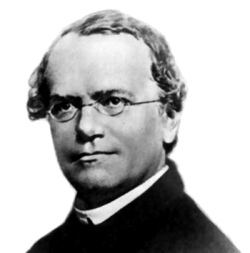
In the annals of scientific discovery, few figures cast as long and influential a shadow as Gregor Johann Mendel. Often hailed as the father of genetics, his meticulous work laid the very groundwork for our understanding of heredity, profoundly impacting fields from medicine to agriculture. Even today, decades after his passing, his pioneering insights are taught in classrooms worldwide, a testament to their enduring relevance. It's no exaggeration to call him the Vader Van De Genetica – the father of genetics – a title he earned through remarkable foresight and unwavering dedication.
The Monk Who Unlocked Life's Code: Gregor Mendel's Revolutionary Experiments
Born in 1822, Gregor Mendel's journey to scientific greatness began not in a bustling laboratory, but within the serene confines of an Augustinian monastery garden in Brünn (now Brno, Czech Republic). It was here, amidst rows of common pea plants (Pisum sativum), that Mendel embarked on a series of experiments that would forever change biology. His curiosity was sparked by a fundamental question: how are traits passed down from one generation to the next, and why do some seemingly disappear only to reappear later?
Unlike his predecessors, Mendel approached this mystery with an unprecedented level of scientific rigor and statistical analysis. Over an eight-year period, he meticulously cultivated and cross-pollinated an astonishing 29,000 pea plants. His method involved a controlled environment, carefully selecting plants with distinct, contrasting traits such as seed color (yellow or green), seed shape (round or wrinkled), flower color (purple or white), and plant height (tall or dwarf). By preventing self-pollination and meticulously controlling which plants mated with which, he could track specific characteristics across multiple generations.
This painstaking process allowed him to observe consistent patterns of inheritance. He noticed that certain traits, which he later termed "dominant," would always express themselves when present, while others, "recessive" traits, would only appear if two copies of that trait were inherited. His quantitative data led him to formulate what we now know as Mendel's Laws of Inheritance: the Law of Segregation, the Law of Independent Assortment, and the Law of Dominance. These laws provided the first coherent explanation for how traits are passed from parents to offspring, why they sometimes skip a generation, and how variations arise. His work truly established him as the undeniable Vader Van De Genetica, long before the molecular basis of genes was even conceptualized.
Mendel's Laws: A Foundation for Modern Genetics
The profound impact of Mendel's discoveries cannot be overstated. His insights into dominant and recessive traits, and the predictable ratios in which they appear, provided a crucial framework for understanding heredity. For instance, his work explained why a tall pea plant crossed with a dwarf pea plant wouldn't produce a medium-sized plant, but rather consistently tall offspring in the first generation, with dwarf plants reappearing in the second. This precise, mathematical approach was revolutionary at a time when biological understanding was largely observational.
Even though his findings were initially overlooked for decades, their rediscovery in the early 20th century catalyzed the birth of modern genetics. Today, Mendel's Laws are not merely historical footnotes; they are fundamental principles taught in biology classes globally. Their practical applications continue to be immense, particularly in agriculture and animal husbandry. Plant breeders utilize these laws to develop crop varieties with desirable traits like disease resistance or higher yields, while animal breeders apply them to enhance livestock characteristics such as milk production or meat quality. This deliberate cultivation of specific traits, guided by Mendel's blueprint, underscores the lasting legacy of the Vader Van De Genetica. For a deeper dive into how our understanding evolved from simple pea plants to complex human traits, consider reading our article on From Pea Plants to Eye Color: Evolution of Genetic Understanding.
Beyond the Pea Plant: Understanding Human Heredity
While Mendel's work focused on pea plants, his foundational principles of heredity are universally applicable, extending even to the intricate world of human genetics. When we ponder what influences the genetics of a baby – whether they will have their mother's eyes or their father's height – we are essentially asking questions that spring from Mendel's initial inquiries. Human heredity, however, is often more complex than a simple pea plant trait, influenced by a combination of genetic and environmental factors.
The interplay between our genetic blueprint and the world around us is often summarized by the formula: Phenotype = Genotype + Environment + (Genotype x Environment). Here, the 'phenotype' refers to all observable characteristics of an individual (like eye color or personality), while the 'genotype' is the unique set of genes inherited from parents. The 'environment' encompasses everything external, from diet and lifestyle to cultural influences.
It's crucial to understand that while environment can significantly influence how certain genes are expressed, it cannot alter the fundamental genetic code for many traits. For example, if a baby's genetics dictate green eyes, their eye color will be green regardless of where they are born or how they are raised. However, the environment plays a pivotal role in shaping other aspects, particularly personality and susceptibility to certain behaviors. Genes might predispose an individual to certain personality traits or an inclination towards habits like smoking or drinking, but the environment often acts as the switch, determining whether these predispositions manifest. A supportive, nurturing environment can help mitigate genetic predispositions towards negative behaviors, highlighting the dynamic and complex relationship between our genes and our life experiences.
The Blueprint of Life: Genes, Chromosomes, and Alleles
At the heart of human heredity lies the intricate machinery of genes and chromosomes. Every person is a mosaic of genetic information, with more than 20,000 genes meticulously packed into 23 pairs of chromosomes. These genes are the fundamental units of inheritance, containing all the instructions that determine a baby's characteristics – from the color of their eyes and the shape of their nose to their finger size and hair thickness. Half of this genetic instruction manual comes from the mother, and the other half from the father, ensuring a unique blend from each parent.
Despite this equal contribution, children often seem to favor one parent over the other in terms of appearance. This phenomenon is explained by the concepts of dominant and recessive genes, first elucidated by Mendel. Each gene exists in two copies, called alleles, one inherited from each parent. The trait that ultimately expresses itself is the one associated with the dominant allele. For instance, brown eye color is typically dominant over green and blue, and green is dominant over blue. This means that if a child inherits an allele for brown eyes from one parent and an allele for blue eyes from the other, they will most likely have brown eyes.
While early research suggested a handful of genes determined traits like eye color, advancements in genetic understanding, particularly concerning the human genome, reveal a much more complex picture. We now know that at least eight genes contribute to eye color alone, illustrating the polygenic nature of many human traits. Furthermore, within these genes, small variations in the DNA sequence – less than 1% – are what create the diversity we see in human populations. These slight variations are what Medline Plus refers to as alleles. Understanding these intricate mechanisms is key to unraveling the mysteries of human inheritance. To delve deeper into these fascinating concepts, including how dominant genes impact a child's traits, explore our article: Unraveling Baby Genetics: Traits, Environment & Dominant Genes.
Conclusion
From the meticulous observations in a monastery garden to the complex mapping of the human genome, Gregor Mendel's legacy as the Vader Van De Genetica remains unparalleled. His groundbreaking experiments with pea plants provided the foundational laws that govern heredity, laws that continue to inform our understanding of life itself. Despite working in an era devoid of any knowledge of DNA or genes, Mendel's scientific acumen allowed him to decipher the fundamental mechanisms by which traits are passed down through generations. His enduring influence reminds us that scientific progress often begins with simple, yet profound, questions and the courage to pursue them with rigor and curiosity. The journey of understanding genetics, which he so brilliantly began, continues to unfold, constantly revealing new layers of complexity and wonder in the blueprint of life.